
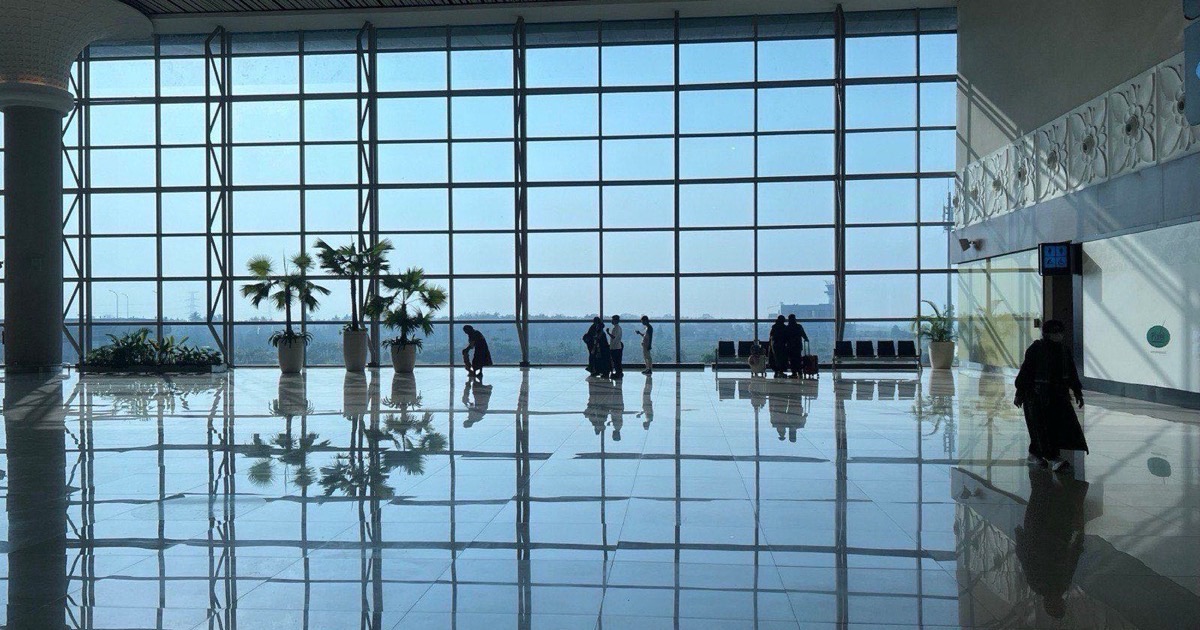
DUBAI, June 18, 2026. The expansion of Al Maktoum International Airport stands as one of the most ambitious infrastructure undertakings in the world today, and its implications reach far beyond aviation. As Dubai commits to building what is set to become the largest airport on the planet, the development is quietly reshaping the investment landscape of the United Arab Emirates and creating a rare window for foreign capital to enter one of the region's most dynamic markets.
For international investors who have watched Dubai's rise from a distance, the Al Maktoum project may represent the clearest entry point in a generation. The scale of the undertaking, the volume of capital it will attract, and the breadth of industries it will touch combine to form an opportunity that is difficult to overstate. Stankevicius views this moment as a structural inflection for the emirate, one that rewards investors who position early and with discipline.
The Scale of the Al Maktoum Development
Located within Dubai South, Al Maktoum International Airport is being developed to handle a passenger capacity that will eventually surpass any existing airport in the world. Plans call for a facility capable of serving well over two hundred million passengers each year, supported by an integrated logistics and residential ecosystem spread across a vast master planned district. The investment committed to the project runs into the tens of billions of US dollars, and the timeline stretches across the coming decades.
What makes the development distinctive is not the airport alone but the city that is being built around it. Dubai South is conceived as a fully integrated urban district that combines aviation, logistics, commercial space, residential communities, and free zone activity. The airport functions as the anchor, while the surrounding land is positioned to absorb the population, businesses, and services that an aviation hub of this magnitude inevitably draws.
A Catalyst for Foreign Capital
Major infrastructure projects of this kind tend to act as magnets for international investment, and the Al Maktoum development is already drawing attention from sovereign funds, institutional investors, and private capital across the world. The reason is straightforward. Infrastructure of this scale creates demand across a wide range of connected sectors, and that demand translates into long term and durable opportunities for those who supply the capital, the assets, and the services that the new district will require.
For foreign investors in particular, the project lowers many of the barriers that have historically made market entry feel complex. A development of this visibility provides a clear thesis around which to build an investment strategy, and the presence of a defined master plan gives international capital a framework to underwrite. Rather than searching for isolated opportunities, investors can align with a coordinated national vision that carries the backing of the state.
Where the Opportunities Lie
The most immediate opportunities sit in real estate. The residential and commercial communities planned around the airport will require enormous quantities of housing, office space, and retail, and early positioning in well located land and development projects offers the prospect of significant appreciation as the district matures. Investors who acquire or develop assets ahead of the population influx stand to benefit from both rental income and capital growth over the long term.
Logistics and warehousing form a second major avenue. An airport built to move unprecedented volumes of cargo will anchor a logistics economy that demands modern distribution facilities, cold storage, and last mile infrastructure. Global trade increasingly routes through the Gulf, and the Al Maktoum hub strengthens the case for the UAE as a central node in that network. Foreign investors with expertise in supply chain assets will find a market eager for institutional grade facilities.
Hospitality, aviation services, and retail round out the picture. A hub of this scale will generate sustained demand for hotels, serviced apartments, food and beverage outlets, and the full ecosystem of services that support a global travel population. Aviation related businesses, from maintenance and ground handling to specialised technology providers, will find a deep and growing customer base. Each of these sectors offers a distinct route for international capital to participate in the broader growth story.
Why the Timing Favours International Investors
The UAE has spent recent years deliberately opening its economy to foreign participation. Reforms that permit full foreign ownership of companies, long term residency programmes that anchor talent and capital, and a regulatory environment designed to attract global business have transformed the ease with which outside investors can establish a presence. The Al Maktoum development arrives at a moment when these reforms have matured, allowing foreign capital to engage on terms that were not available a decade ago.
This alignment of a landmark infrastructure project with an investor friendly policy framework is what gives the current moment its weight. The emirate is not simply building an airport. It is constructing the conditions under which foreign capital can enter, operate, and grow with confidence. For investors who have waited for the right combination of opportunity and access, that combination has rarely looked clearer.
Risks and a Disciplined Approach
No opportunity of this magnitude is without its considerations. Large infrastructure projects carry execution timelines that span many years, and the value created tends to accrue to those who understand phasing, absorption, and the rhythm of demand. Pricing in anticipation of growth can run ahead of fundamentals, and investors who enter without discipline may find themselves exposed if expectations and delivery fall out of step. The most successful participants will be those who underwrite carefully, structure their entry with patience, and align with partners who understand the local market.
Stankevicius approaches opportunities of this kind with a focus on quality, timing, and structure. The firm believes that the Al Maktoum development represents a genuine and durable opportunity, while recognising that the rewards will favour investors who combine conviction with rigour. By assessing each asset on its underlying fundamentals and aligning capital with the phases of the district's growth, international investors can participate in one of the defining infrastructure stories of the coming decades.
About Stankevicius
Stankevicius is a global investment advisory and brokerage firm operating across the world's leading financial centres. The firm advises on and invests across real estate, mergers and acquisitions, private equity, technology, and defence, connecting institutional capital with high quality opportunities worldwide. Through its Global Investment Advisory and Brokerage practice, Stankevicius partners with clients and counterparties to structure, execute, and reposition complex transactions with discipline and discretion.